
Upgrading your home with a heat pump can lead to long-term energy savings, better indoor comfort, and a reduced carbon footprint. However, homeowners often have many questions about installing heat pumps. Knowing what to expect helps you prepare your home, budget your time, and feel confident when working with our HVAC professionals.
Initial Home Assessment and Load Calculation
Before we begin installation, we must perform an in-home evaluation. The assessment includes inspecting your home’s layout, size, insulation, ductwork, and windows. It’s about much more than measuring square footage. Our technicians consider your home’s orientation, the occupants, and the climate.
Our professional technicians perform special calculations to help us determine the proper system size. We must ensure the heat pump is not too small or too large to heat and cool efficiently. Oversized units can short-cycle and waste energy, while undersized systems may run constantly and cannot meet demands.
Choosing the Right System for Your Needs
We will present various system options once we complete the evaluation and calculation. There are multiple types of heat pumps, including air-source, ground-source, ducted, and ductless units. Units also come in single-stage or variable-speed models.
The choice will depend on your home’s layout, efficiency goals, and your budget. Rebates and incentives can also affect your decision. We can guide you through the selection process to help you get the most value from your investment.
Evaluating Electrical Capacity
Heat pumps require proper electricity to run effectively. The pre-installation checklist involves examining your home’s electric panel and wiring. Older homes may need an electrical upgrade to accommodate the new heat pump. This may include adding a sub-panel, upgrading your main panel, or adding a dedicated circuit.
Failing to address electrical capacity before installing a heat pump can cause multiple problems. Identifying any inefficiencies before we start the installation process is essential to avoid unnecessary problems and delays.
Scheduling and Preparing for Installation Day
We schedule your heat pump service once you approve the system choice and financing. Leading up to the installation, we may ask you to clear the work areas and ensure safe access for our technicians.
For duct systems, this includes attics, crawlspaces, and utility closets. If you install a split system, you can move furniture away from the intended wall-mount areas.
Our installers will also need access to the outside installation point. The installation location must have proper drainage and be free of any debris. We will give you the information you need to prepare for the installation so that everything proceeds smoothly.
Removing the Existing Equipment
If you are replacing an old unit, our technicians will begin by safely unhooking and removing it. We will shut off power to the old unit, disconnect refrigerant lines, and dismantle the system and connections. We recover old refrigerant according to EPA standards.
This process can take a few hours, depending on the complexity of your old system. During removal, our technicians will check for hidden issues like corroded ductwork or moisture damage so that we can address them before proceeding with the installation.
Installing Indoor and Outdoor Units
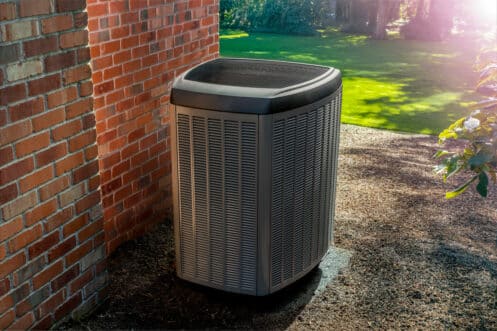
After clearing the old system, our team moves on to installing your new heat pump. We set the outdoor unit on a solid level base. Depending on your property, this may involve a concrete pad or ground leveling.
We must level the outdoor unit to ensure proper function. Our technicians must also ensure the outdoor unit has ample space around it to avoid airflow restriction.
Next, we install the indoor components. This may involve placing the air handler in the basement, attic, or utility room for ducted systems.
We install the indoor unit on a wall or ceiling with mini-split heat pumps. These indoor units connect to the outdoors through refrigerant lines and communication wires.
The timeframe for this part of the installation can also take a few hours, depending on your home and the new system. Our technicians will keep you updated throughout the installation.
Ductwork Modifications or Additions
If your heat pump connects to the central duct system, we may need to adjust the ductwork. Modifications or additions may be necessary to ensure airflow.
Ductwork modification may include sealing, insulating, or resizing ducts. This step is crucial because damaged, leaky, or improperly sized ducts can impair your heat pump’s normal function.
In some cases, we must add new duct sections to rooms. For homes transitioning from baseboard heat or radiators, this may involve a significant installation process.
Electrical Wiring and Thermostat Setup
Our technicians will then wire your new heat pump to your electrical panel. This process includes setting up breakers, grounding the unit, and verifying voltage capacity. A licensed electrician will oversee these tasks to ensure code compliance and safety.
We then install the thermostat. Some heat pumps use smart thermostats that you can control remotely through your smartphone. If your system has multiple zones, each one will get its own thermostat for a tailored comfort experience.
Charging the Refrigerant and Testing
Once we connect everything, our technicians will charge the system with the appropriate amount of refrigerant. Heat pumps cannot operate appropriately without precise refrigerant levels, and too little or too much can damage the compressor.
After charging your new system, we begin the testing phase. We inspect all connections and start the unit to allow it to cycle. Our technicians will check both heating and cooling modes and ensure proper operation. They will also measure airflow and startup performance. We evaluate every component for adequate performance and efficiency.
Cleanup and Final Inspection
After the installation is complete, our team clears the work areas. We conduct a final walkthrough to ensure code compliance, safety, and proper installation. Our installers will be there to answer your questions and educate you about your new system.
Long-Term Maintenance
Heat pumps need maintenance to keep them operating effectively and efficiently. We recommend scheduling yearly maintenance appointments for your central heat pump or mini-split unit to protect your system’s performance and maintain the warranty.
Our Dallas maintenance services offer custom solutions for your new heat pump. Over the years, we will inspect, make adjustments, lubricate, and clean your heat pump to keep it working efficiently. These services give you peace of mind knowing your new heat pump is protected.
A Clear Path to Comfort and Efficiency
Installing a new heat pump involves careful planning and preparation. Our technicians at Precision Heating & Air will handle all the details and keep you informed along the way. Each step plays a critical role, from the initial assessment to the final walkthrough and ongoing maintenance. Knowing what to expect can help you stay informed throughout the installation process and beyond.
Precision Heating & Air is a family-owned and operated HVAC company with more than 60 years of experience in the industry. Our outstanding customer service and knowledge set us apart from the rest. We back our products with warranties and a 100% guarantee for your satisfaction. We are Trane Comfort Specialists, but we provide installation, maintenance, and repairs for all makes and models.
Contact us at Precision Heating & Air today to install a heat pump in Dallas, GA. Let us handle every detail!
