
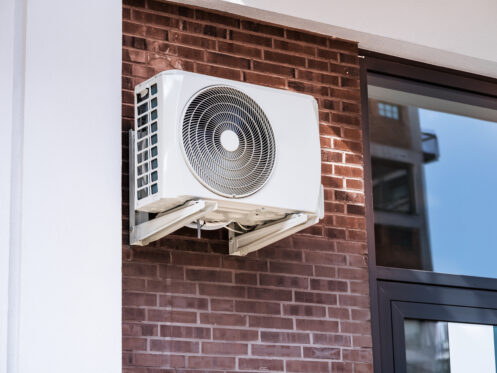
In recent years, ductless mini-splits have been emerging as the premier HVAC solution for many homeowners. These advanced systems give you granular control over indoor comfort, and their energy efficiency ratings make them a wise option for monthly savings. As with all other HVAC systems, the effectiveness of mini-splits depends on proper sizing. Whether you are cooling a studio apartment or a large estate, the HVAC effectiveness of your mini-split system is primarily determined by its capacity. With this in mind, let’s break down how Precision Heating & Air calculates and evaluates the sizing and thermal efficiency of mini-splits for your living spaces.
Are Ductless Mini-Splits Right for You?
The first factor to consider involves structural and system suitability. The energy efficiency, zone control, and advanced inverter technology features of modern mini-splits appeal to many homeowners in our region. However, the systems cannot be installed in all areas. The ideal candidates for these systems include properties without existing ductwork, such as historic homes, multifamily units, conversions, and modern additions.
You can go ductless if you own a home with an existing central HVAC system. To this effect, you can replace it with mini-splits while leaving the old ductwork mostly intact. For home addition projects, mini-splits reduce the cost of extending your central system’s coverage. Installation almost invariably requires nothing more than a small hole to run the power and refrigerant lines. That makes mini-splits perfect for high-rise condominiums. For projects to remodel older loft conversions, mini-splits effectively and elegantly replace bulky window units and expensive baseboard heaters.
The second factor to consider involves modern mini-split technology. At Precision Heating & Air, our technicians currently install high-efficiency mini-splits with inverter-driven mechanisms. This means you get excellent energy efficiency, zone temperature control, quiet performance, optimal indoor air quality, and smart home network integration. Essentially, today’s mini-splits are advanced heat pumps you can safely install without ductwork, keeping your electricity costs low while lowering your carbon footprint.
Mini-Split Load Capacity Determination
When we sit down with customers to evaluate their mini-split options, we present them with suitable equipment based on their comfort preferences. The square footage of your living spaces helps our technicians determine which mini-split brands and models are available. However, this is only one factor in the Residential Load Calculation found in Manual J of the Air Conditioning Contractors of America (ACCA).
The Manual J calculation is the North American standard for determining the precise amount of heating and cooling a home needs to maintain comfort. We perform a Manual J calculation for each HVAC installation we complete. It helps our technicians determine how much heat your home loses in the winter and gains in the summer. The numeric results ensure your mini-split is not so large that it short-cycles and wastes energy. It is also not so small that it struggles during the hottest summer afternoons.
The factors we input into the Manual J calculation are:
- Insulation R-values
- Window type and orientation
- Home envelope
- Internal heat gain
- Local climate conditions
Our technicians inspect the insulation in your walls, attic, and floor to check for the R-value, wherein the “R” stands for resistance to heat flow. We check your windows for energy efficiency, ranging from single-pane to low-E reflective insulation glass. You will need more cooling capacity if your home features west-facing windows. We inspect your home for air infiltration and leaks through gaps in doors and windows. The internal heat gain factor is a calculation in and of itself. It adds up the contributions from all household members and major appliances to the total thermal load. For local climate and environmental conditions, we check ACCA updates by district, considering nearby water features and tree canopy coverage.
Determining Your Room Coverage and BTU Needs
We input the data we measure and collect into ACCA-approved tools like Wrightsoft and Cool Calc to get a Manual J calculation result. This is expressed in British Thermal Units (BTUs), which measure the amount of heat needed to raise the temperature of one pound of water by one degree Fahrenheit.
HVAC technicians interpret BTU ratings as indicators of cooling and heating capacity per hour. This is easier to understand with a rule of thumb recommended by the United States Department of Energy: A 12,000-BTU (one-ton) HVAC system can cool up to 550 square feet. Please note that Precision Heating & Air would never rely on this rule of thumb alone. This is because it doesn’t account for factors like sunrooms with floor-to-ceiling windows or busy kitchens that are constantly running the oven. Such factors would merit a 20% increase in BTU capacity to maintain consistent temperatures. This is why Manual J calculations are the only way to go for any HVAC system installation.
Zone control is another reason Manual J calculations are mandatory when selecting and installing ductless mini-split systems. Depending on your indoor comfort needs and preferences, our technicians can conduct a room-by-room analysis for independent zoning. We evaluate the thermal profile of each room where individual mini-split head units will be installed. For example, a master bedroom with large south-facing windows has significantly different heating and cooling demands than a basement home office or a media center, even if they have similar square footage.
When we identify these distinct temperature zone requirements, we can specify the exact capacity for each indoor head. This ensures the system provides balanced comfort without wasting energy. Kitchens and home gyms typically demand higher cooling loads because of internal heat gain. Our technicians help you select units that precisely meet your cooling and heating demands. A “one-size-fits-all” approach to HVAC sizing would never work for ductless mini-splits. This is particularly true for modern models with inverter-driven compressors to modulate output across all temperature zones, thus providing dehumidification and temperature stability.
Understanding the Current Situation of Ductless Mini-Splits in Atlanta
According to industry data compiled by Mordor Intelligence and Global Market Insights, the future of cooling and heating systems in the Atlanta Metro Area will feature widespread installation of ductless mini-split systems. In other major American metros, a few micro housing markets are already reporting mini-split installations in over 50% of households. These are typically urban clusters and historic districts.
Local HVAC market research shows that ductless mini-split installations are on the rise at the Old Fourth Ward and Virginia-Highland historic districts of Atlanta. This is where Victorian homes and bungalows lack the structural cavity spaces required by central HVAC systems. In the Atlantic Station district, where vertical development prevails with high-rise condo towers, mini-splits allow architects to design residential units with higher ceilings and larger floor plans. This thereby extends usable square footage.
The Bottom Line of Mini-Split Sizing in Atlanta
Manual J calculations help you select the ductless mini-split system tailored to your property, household, and lifestyle. Whether you are installing a new HVAC system or replacing an existing one, mini-splits are always a wise option. At Precision Heating & Air, our offerings go beyond mini-splits. We are a full-service HVAC company that can service central systems, gas furnaces, dehumidifiers, legacy heat pumps, and more.
To learn more about proper mini-split sizing in Atlanta, contact our office today.
