
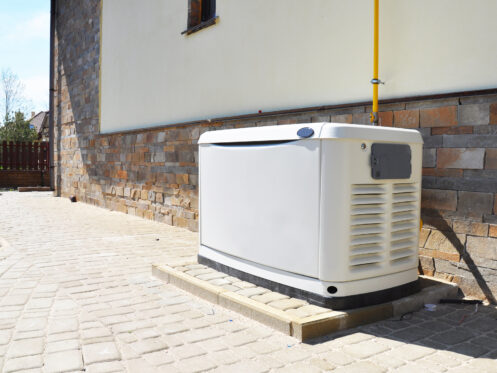
Having a generator comes in extremely handy any time the power to your home goes out. With a portable generator, you can at least charge your phone and run an extension cord into the house to plug in lamps or whatever else. A whole-house standby generator is even better as it connects directly to your electrical system and will automatically turn on and start sending electricity to your home when your power goes out. As long as the unit is large enough, you’ll have enough power to use everything you need just like you normally do. The only real concern is that having to rely on generator power for any prolonged amount of time can be fairly expensive, but the cost can vary quite a bit based on various factors. We’ll explain further what these factors are and how you can estimate the cost of running any type of generator.
Cost of Fuel
The type of fuel a generator uses is a major factor in how much it costs to run. Portable generators can run on gasoline, diesel or propane while standby generators run either on propane or natural gas. The cost of diesel fuel per gallon is usually higher than the cost of gasoline. Nonetheless, diesel generators typically cost less overall to run as they tend to be more efficient than gasoline generators.
Standby generators are larger and produce more power than the majority of portable generators, which means that they can potentially be more expensive to run. The reason we say technically is that propane and especially natural gas are much cheaper than diesel and gasoline, meaning the cost per kilowatt of electricity a standby generator produces is lower. Quality standby generators also tend to be more fuel efficient than portable units.
Hourly Fuel Consumption Based on Load
Once you know the cost of fuel, you can then calculate how much it costs to run a generator based on how much fuel it consumes per hour. The only issue is that hourly fuel consumption fluctuates based on the generator’s load, i.e., how much power it’s currently needing to supply.
A 10-kilowatt gasoline generator can consume around 1.5 gallons per hour on average when running under a full load or around 0.75 gallons per hour if it’s only running at 50% load. If you paid $3 a gallon for gas, it means it would cost $4.50 to run the generator for an hour at full capacity. A 10-kilowatt diesel generator running under a full load typically only uses around 0.75 to 1 gallon per hour, meaning it would cost you less to run than a gasoline generator would if gas and diesel prices were equal. Portable propane generators tend to cost the most to run as a 10-kilowatt unit will usually consume between 2 and 3 gallons per hour when running under a full load. The trade-off is that propane burns more cleanly and is better for the environment.
The average standby generator is 20 kilowatts as a unit this size typically supplies enough electricity to power an entire house. A 20-kilowatt propane standby generator will usually consume around 4 gallons per hour under a full load or only 2 gallons per hour under a 50% load. Based on an average cost of $2.50 per gallon of propane, you’d pay around $120 to run the generator at 50% capacity for a full 24 hours.
Calculating the cost of running a standby generator on natural gas is a bit trickier as natural gas is measured in cubic feet instead of gallons. A 20-kilowatt natural gas generator running under a full load will typically use around 300 cubic feet per hour. While this may sound extremely high compared to the fuel consumption of other generators, it really isn’t when you consider that the average cost of natural gas is only around $15 per thousand cubic feet or around 1.5 cents per cubic foot. At this cost, you’d pay around $4.50 per hour to run the generator at full load or only around $54 to run it for 24 hours under a 50% load.
When you consider that this is potentially around as much as it could cost to run a 10-kilowatt portable generator, you can quickly see why standby generators are the superior option. The fact that natural gas generators cost much less to run than propane units is also why the majority of people opt for natural gas if possible.
It’s important to note that all of the numbers we’ve given are just very rough estimates. The actual cost to run any type of generator could be higher or lower depending on how efficient it is and the current cost you pay for fuel. Nonetheless, the fact is that standby generators are overall a more cost-effective option than portable generators.
How Maintenance Keeps the Cost of Running a Generator Down
Regular maintenance is crucial for any type of generator but especially so for standby generators. One reason is that maintenance helps protect the life of the unit so that it lasts as long as possible, which is important considering how much it costs to install a standby generator. If you don’t keep up with tasks like changing the oil and replacing the oil filter, the generator motor can end up burning out due to a lack of lubrication. Other tasks like checking and cleaning or replacing the spark plugs are essential for ensuring that the generator remains reliable and will always start up when you need it.
A properly maintained generator will also work more efficiently, ensuring it doesn’t unnecessarily waste fuel when it’s powering your home. One major concern in terms of efficiency is not changing the air filter often enough and the incoming airflow becoming restricted. Oxygen is vital for combustion and ensuring that the natural gas or propane burns cleanly. If the generator isn’t receiving sufficient airflow, it can result in incomplete combustion and the generator not producing as much power as it normally does. That means the generator has to burn more fuel to produce the same amount of power. If the generator isn’t working as efficiently as it was designed to, it may also not be able to operate at its maximum capacity and could potentially get overloaded when running under a high load.
Making sure the generator has sufficient airflow helps prevent it from overheating as well. That’s why you need to make sure to keep the area around the generator free of objects and debris and always keep at least 5 feet of clearance around the unit.
If you want to make sure your home is protected against blackouts and power outages, Precision Heating & Air is ready to help. We’re the most trusted source for standby generator installation in the Atlanta Metro area, and we offer a range of quality Generac units, which are among the very best in the industry. When you choose us, you can be certain that we’ll evaluate your house to accurately determine what size of generator you need. We also offer financing on approved credit if cost is a concern.
To set up a consultation and get help finding the right standby generator for your home, contact us today.
